“This course is about lending our hands and backs to our brothers, sisters, and fellow creatures of SoCal. We are here to help, make friends, ask ‘why?’, and most importantly to ask ‘why not?’ This is Service Learning in the truest sense.”
– Dr. Sean Anderson, founding faculty of our ESRM 492 experiences
Our History of Service Learning
New Orleans: The Originator
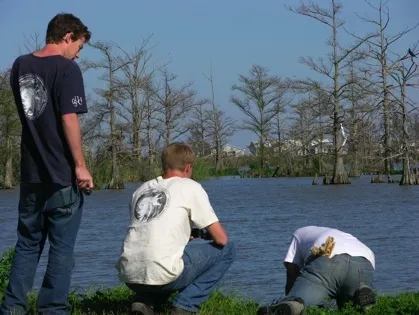
Twenty years ago, our first ESRM 492 course was born in the immediate wake of Hurricane Katrina’s August 29, 2005 landfall in Louisiana. The frustration faculty and students felt throughout the fall of 2005 culminated in a 2006 exploratory trip that solidified the decision to bring students to the Gulf Coast as part of a formal educational experience. From the outset, we have focused on understanding and rehabilitating both natural and human-dominated landscapes. Those early trips focused on demolishing damaged home and businesses while simultaneously surveying the hurricane-induced spread of three non-native woody species in the once-healthy cypress (Taxodium distichum) swamps that acted as a storm buffer south of the City of New Orleans. As the years progressed, our ecological management efforts expanded and matured. We soon began actively herbiciding our woody invasive species, designing restoration experiments, and assessing the efficacy of our invasive control in support of Woodlands Conservancy’s long-term efforts to protect and manage our coastal wetlands. In effect we become the survey department or pro bono consulting firm for what is now Woodlands Conservancy, a wonderful 501(c)(3) dedicated to protecting, managing, and boosting the passive recreational opportunities within these coastal wetlands.
Students exploring rapidly- eroding cypress swamp ~1 hour south of the city of New Orleans during our 2007 ESRM 492 class to Louisiana. Water now stands where dry ground should be.
As we were becoming increasingly sophisticated in our ecological management efforts, so too did we deepen our work in the built environment. By 2009 most homeowners and small businesses had run out of fiscal reserves and rebuilding damaged structures slowed to a crawl. This reality combined with some sober reflection upon where are true strengths lay led us to change our focus in the urban areas where we worked. Since 2010, we have de-emphasized the physical rebuilding of structures and turned towards installing community food gardens in “food desert” neighborhoods. Our continuing work in New Orleans now splits trip days more or less evenly between garden installations and wetland restoration work.
Maui Wildfire Recovery
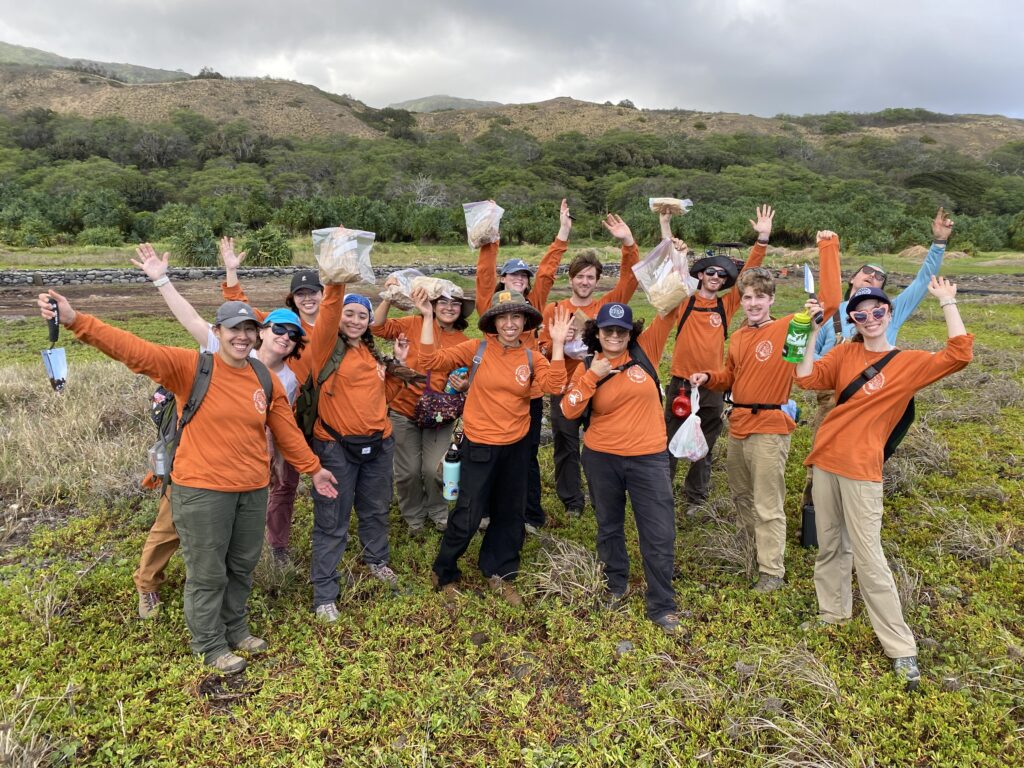
ESRM has a long history of research and teaching across the Hawaiian Islands. We have been working on the ecology of humpback whales in the Maui channel for more than 20 years and took our first coastal management course to Oahu and the Big Island in 2012. We pivoted to working explicitly on disaster recover on Maui the wake of the 2023 summer fires that devastated Lahaina and much of west Maui. Since 2023 we have documented pollution levels and fire impacts across the island, spending a huge amount of our time providing direct aid to impacted residents, revegetating landscapes, and rebuilding community centers and infrastructure.
Students after a morning of ancient fish-pond walls repairs near the Maui’s Ka’ehu Restoration overseen by the Hawai’i Land Trust in January 2025.
Los Angeles: Chapter 3
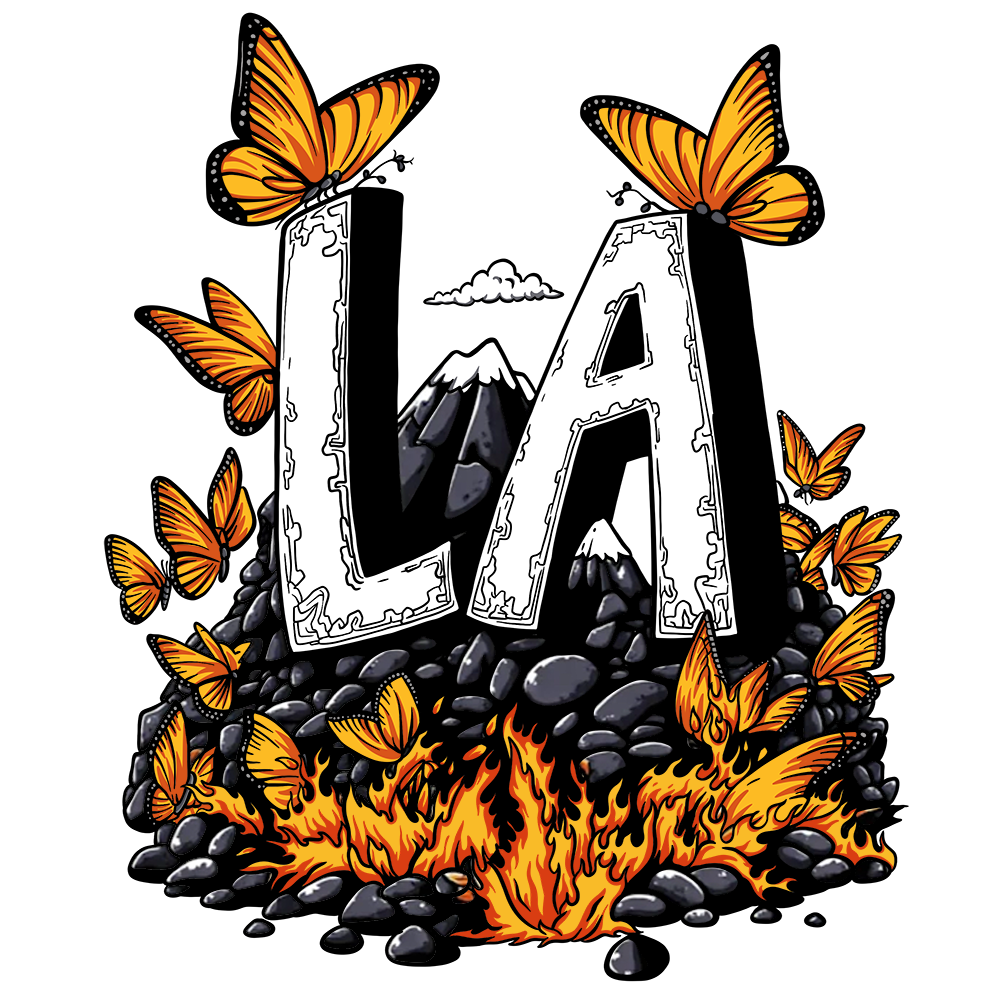
While we have long-worked to help people and governments impacted by wildfires across southern California, before 2025 we did such work outside of our ESRM 492 course framework. The wildfires of January 2025 clearly represented a new era of destruction, dwarfing even our recent Thomas (2017) and Woolsey (2018) Fires. The summer of 2025 finds us turning our attention to impacted areas from the Palisades to Altadena.
This summer, we are focusing on wildfire recovery and ecological resilience in response via our time-tested interdisciplinary, community-engaged experience. Our course will combine fieldwork, ecological monitoring, and collaborative restoration efforts in partnership with local agencies, nonprofits, and residents. Students will participate directly in habitat restoration, invasive species management, and post-fire erosion control while intimately learning about the socioecological dynamics of wildfires in southern California. Through reflection, data collection, and restoration projects, students will contribute to long-term community recovery and environmental stewardship while gaining hands-on experience in applied conservation and civic engagement.
Creativity and innovation
A lacus vestibulum sed arcu non odio euismod lacinia at. Ante in nibh mauris cursus mattis molestie a iaculis. Ipsum suspendisse ultrices gravida dictum fusce ut. Eget magna fermentum iaculis eu non diam.
User-centered design
A lacus vestibulum sed arcu non odio euismod lacinia at. Ante in nibh mauris cursus mattis molestie a iaculis. Ipsum suspendisse ultrices gravida dictum fusce ut. Eget magna fermentum iaculis eu non diam.
Adaptability
A lacus vestibulum sed arcu non odio euismod lacinia at. Ante in nibh mauris cursus mattis molestie a iaculis. Ipsum suspendisse ultrices gravida dictum fusce ut. Eget magna fermentum iaculis eu non diam.
Technical skills
A lacus vestibulum sed arcu non odio euismod lacinia at. Ante in nibh mauris cursus mattis molestie a iaculis. Ipsum suspendisse ultrices gravida dictum fusce ut. Eget magna fermentum iaculis eu non diam.
Communication
A lacus vestibulum sed arcu non odio euismod lacinia at. Ante in nibh mauris cursus mattis molestie a iaculis. Ipsum suspendisse ultrices gravida dictum fusce ut. Eget magna fermentum iaculis eu non diam.
Project management
A lacus vestibulum sed arcu non odio euismod lacinia at. Ante in nibh mauris cursus mattis molestie a iaculis. Ipsum suspendisse ultrices gravida dictum fusce ut. Eget magna fermentum iaculis eu non diam.